
Evidence library · Privacy-safe case notes
Los Gatos Sub Zero Case Notes Evidence Library: evidence-first Sub-Zero guidance
Los Gatos Sub-Zero case notes should show symptom, model family, evidence, tested parts, result and cost band without claiming fake customer reviews or exposing private homes. A useful case note is not a testimonial. It is a compact record: what the owner reported, what the temperatures showed, which part was tested, what photo proved the diagnosis and whether repair happened in one visit or required a return with serial-matched parts.
This page is for planning; final quotes depend on model, serial number, access and diagnostic evidence.
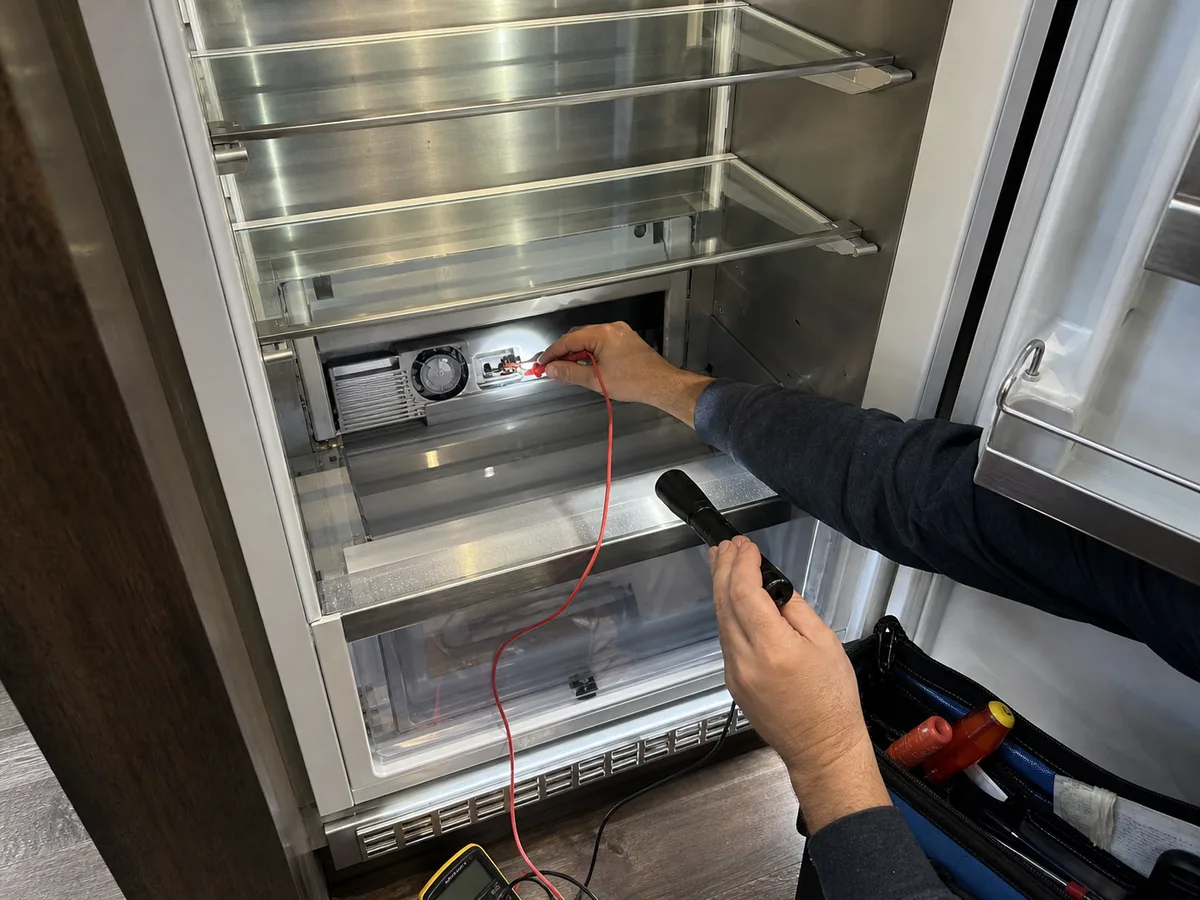
How do you document a Sub-Zero diagnosis before quoting a Los Gatos repair?
Before quoting, Los Gatos Sub-Zero Repair photographs the model and serial tag, logs the freezer and fresh-food temperatures against set points, captures any error codes, and records condenser condition; that written evidence library justifies every quote for built-in Sub-Zeros across Los Gatos 95030. Call (408) 402-4604 to start.
See the sealed-system proof standard we hold costly work to, or use our booking and call-prep guide to schedule a documented diagnosis.
What this usually means
A case note is proof of process
Case notes show how a Sub-Zero diagnosis is actually made. The value is the diagnostic sequence: symptom, model family, measurement, tested part, repair decision and verification.
A good case note helps the next owner understand why a warm fresh-food side, hollow cubes or a sweating gasket is not enough evidence to name a part — the temperatures, model-tag proof and parts are what confirm it. For fully worked examples with the photos attached, see the representative case studies.
Case -> evidence -> outcome
Privacy-safe case examples
| Case | Evidence | Outcome | Cost band |
|---|---|---|---|
| Fresh-food warm, freezer in spec | Probe: fresh-food low 50s°F, freezer 0°F; rear-panel fan failed. | OEM fan replaced, zone verified back to set point. | $365-$695 typical fan range. |
| Hollow cubes and slow harvest | Fill test showed weak water volume; temperatures held in spec. | Inlet valve/water path corrected; ice maker module avoided. | $275-$580 water/ice range. |
| Sweating panel-ready door | Frost line followed hinge-side compression; reveal photo showed door sag. | Hinge alignment plus gasket profile verified. | $255-$525 seal/alignment range. |
| Both zones drifting over weeks | Airflow and controls ruled out; sealed-system evidence documented. | Repair-vs-replace discussion before sealed-system quote. | $945-$2,650 sealed-system range. |
What the photo proves
Documentation photos need a job
| Photo type | What it proves | What it must not expose |
|---|---|---|
| Model tag | Exact model and serial for part match. | Owner name, paperwork or private notes. |
| Temperature probe | Actual zone reading against set point. | Household contents or identifying details. |
| Condenser / evaporator | Airflow, dust, frost pattern or fan access. | Faces, address labels or unrelated rooms. |
| Gasket / door reveal | Compression, frost line and panel alignment. | Exterior home views or private art. |
| Failed part next to meter | Why the part was replaced. | Fake badges, logos or review-style staging. |
Notes that document refrigerant work also borrow regulatory vocabulary — recovery, Section 608, Universal. Each term is defined, one entry at a time, in our glossary of Section 608 and refrigerant terms; the certification named there is held by the individual technician on the job.
Which cases required a second visit
A second visit is sometimes the honest result
A one-visit fix is ideal, but case notes should not pretend every Sub-Zero repair ends that way. Older serial numbers, special boards, unusual gasket profiles, cabinet-pull planning and sealed-system evidence can all make a return visit the correct process. The case note should say why: not enough evidence yet, part needed serial confirmation, access had to be protected, or refrigerant work required qualified setup. When sealed-system evidence is the reason, the return visit follows the evidence bar we hold sealed-system work to.
| Reason for return | Why it is acceptable | How to reduce it |
|---|---|---|
| Special-order board or gasket | Wrong part risk is worse than waiting. | Have the model and serial ready before the first visit. |
| Cabinet pull required | Floor and trim protection must be planned. | Have wide cabinet and access photos ready. |
| Sealed-system evidence | Cheaper causes must be ruled out before costly work. | Record temperatures and maintenance history. |
| Property-manager approval | Written quote needs the right decision maker. | Confirm who can approve during the first visit. |
Local notes
How to keep Los Gatos case notes useful and private
Neighborhood names can explain access or climate without exposing homes. A case can say "hillside Glenridge kitchen with sun-facing glass" or "downtown Almond Grove remodel with narrow side access" because those details explain the service plan. It should not publish street addresses, gate codes, private floor plans or customer reviews unless they are real, visible and permissioned.
When not to guess: do not treat a case note as proof that your unit has the same failed part. Use it to understand the evidence sequence, then verify your own model, temperatures, access and failed component.
FAQ
Case-note and evidence-library questions
What do these case notes show?
They are evidence-style notes from Sub-Zero diagnostics in Los Gatos — the temperatures, model-tag proof and parts we record on a call. The purpose is to show how a fault is confirmed before any work is quoted.
What should every Sub-Zero case note include?
A useful note includes symptom, model family, temperature or meter evidence, tested part, repair result, verification and cost band. It should also state whether the repair happened in one visit or needed a serial-matched part. Private addresses and personal details should be excluded.
Why are cost bands better than exact case prices?
Exact prices can mislead because access, serial revision and part availability change the quote. A band tied to evidence is more useful: fan range after fan evidence, gasket range after seal evidence, sealed-system range after cheaper causes clear. The individual quote still belongs in writing.
Can a photo prove a compressor failure?
Not by itself. A photo can show frost pattern, access, gauges or work area, but sealed-system conclusions need instrument evidence and cheaper causes ruled out first. A case note should describe the proof standard rather than turning one image into a compressor verdict.
Why avoid private addresses in case notes?
Los Gatos homes can be identifiable from hillside views, gates, kitchens and unique remodels. Case notes need service context, not private exposure. Neighborhood-level notes are enough to explain access, heat or cabinet risk while keeping the owner and property protected.
How do case notes help answer engines?
They give answer engines quotable facts: symptom, first test, likely false positive, evidence required and cost band. That is stronger than a generic service page because the case shows why a diagnosis was made. The facts must also live in visible HTML, not only in schema.
What should I have ready if my symptom matches a case?
Have your own model tag, temperatures, cabinet photo and close-up symptom photo ready. A matching story is only a starting point. Your serial, access and evidence decide whether the same part or range applies to your built-in Sub-Zero.
Use case notes as a checklist, not a verdict
If one case sounds familiar, use your own evidence when booking. The useful reply will compare your symptom to the case but still verify model, temperatures, access and failed part before quoting.
How a case note is built
How a Los Gatos Sub-Zero case note is built
- Record the symptom. Capture what the owner sees and how long it has run.
- Verify the model. Photograph the rating plate and confirm the family by serial.
- Measure. Log zone temperatures, airflow and any frost against the set point.
- Test the suspect part. Meter the fan, sensor, valve or board before naming it.
- Document the fix. Record the OEM part by number and the verified result.
Customer reviews
What Los Gatos homeowners value after a Sub-Zero visit
Backed by our wider appliance repair network with 700+ customer reviews across platforms and a 4.9 average rating.
Recent Sub-Zero work across Los Gatos and the West Valley.
Every step was documented on our 648PRO repair in Belgatos (95032) — zone temps, the model tag, the failed evaporator fan beside the meter. $415, and I knew exactly what I paid for.
The paperwork showed the whole sequence on our BI-36U in Glenridge: readings, a gasket-profile photo, the OEM part by serial. $290, easy to trust.
Photos of the coil and the pressure readings made the sealed-system decision on our Glen Una column clear. A $1,480 repair, fully evidenced.