Skip to content
Bayline Kitchen Appliance Technicians BaylineSub-Zero Repair · Los Gatos
GoogleLos Gatos reviews Call now(408) 402-4604 Book Online

Los Gatos · Built-in Sub-Zero repair

Sub-Zero repair in Los Gatos, starting from a real diagnosis — not a guess

If your Sub-Zero is running long and warming up in a Glen Una estate kitchen, the first suspect is rarely the compressor — it is a condenser coil packed with dust or pet hair behind the top grille, choking airflow so the unit can't shed heat. We are a Sub-Zero-focused repair service in Los Gatos. Before anyone quotes a part, we read both compartment temperatures, inspect the coil and the door seal, and confirm whether you have an airflow problem, a control problem, or a true sealed-system fault. You get the actual cause, in writing, then the price.

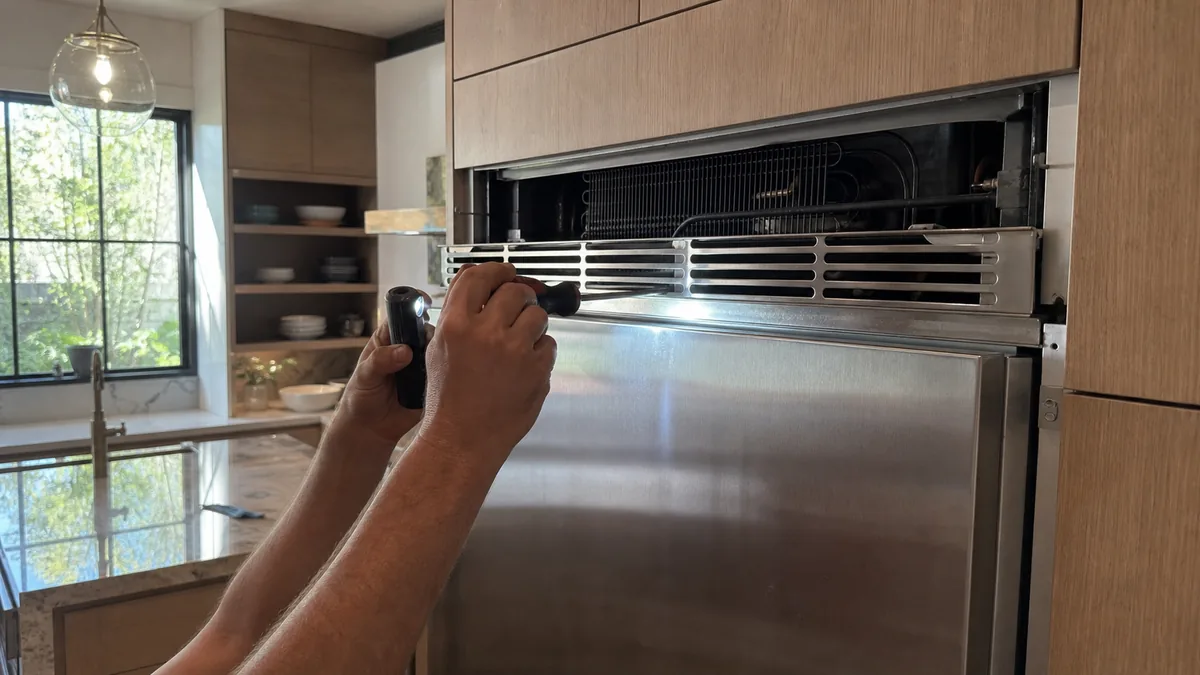
Technician hands opening the top grille of a built-in stainless refrigerator to inspect condenser airflow in a cabinet-safe service visit
Where heat escapes. The condenser sits behind the top grille — the first place dust and pet hair choke a built-in's airflow.

A second symptom we read the same way: the door frost line

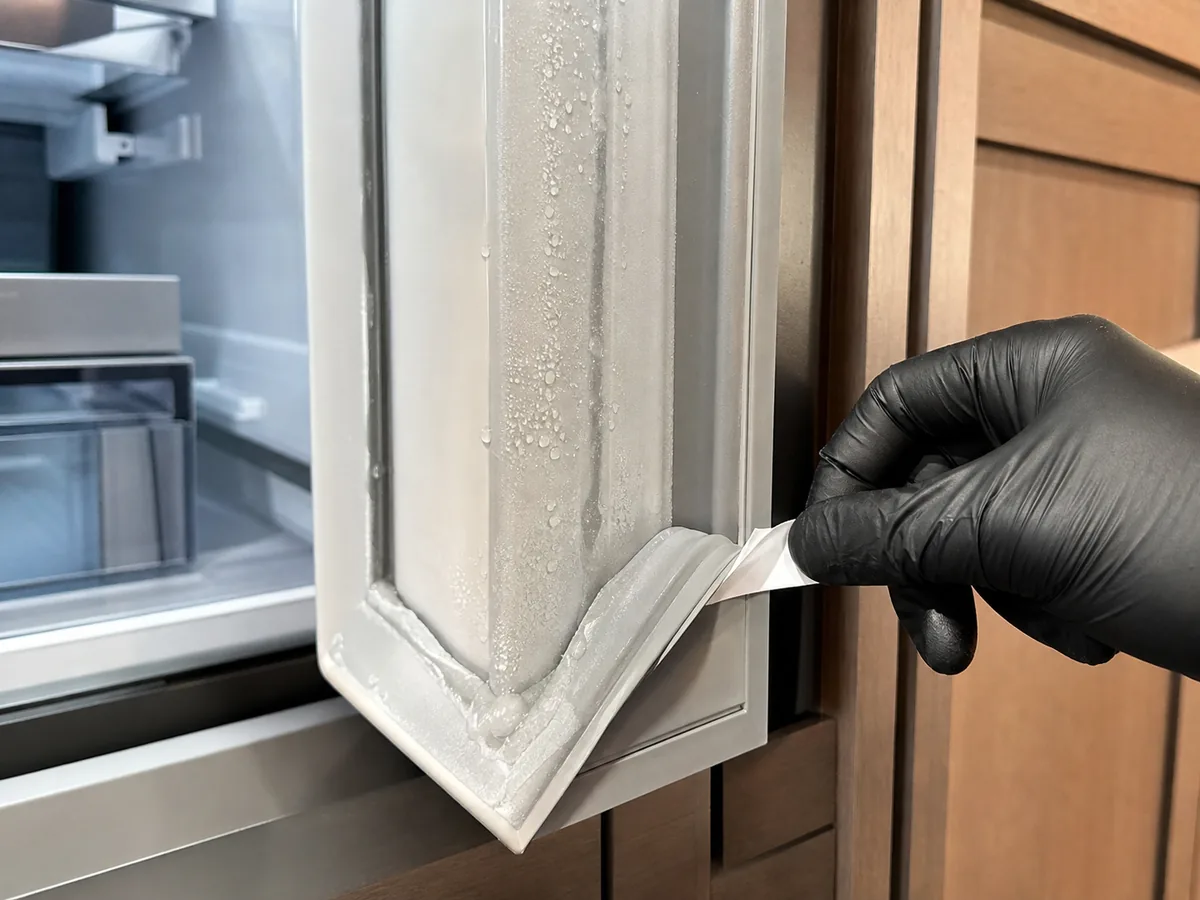
The other call we get most is a door gasket leak — condensation or a frost line around the opening. In plain terms: the magnetic gasket has compressed, hardened, or torn, so warm valley air leaks past the seal and the unit fights it by frosting where the cold meets the warm. The pattern of that frost line is diagnostic. Frost concentrated at one hinge points to a sagging panel-ready door or a tweaked hinge rather than the gasket itself; an even frost band around the whole opening points at the gasket. We confirm it with a closure check and, where needed, a dollar-bill drag test around the perimeter before deciding what actually gets replaced.

Close-up of a refrigerator door gasket with condensation and a paper seal check during service
Gasket cross-section. Where the magnetic seal compresses, warm air leaks and the frost line forms — the evidence that tells us gasket versus hinge.

What we can't know before inspection: from a photo and a description we can tell you the likely cause, but we cannot confirm whether it is the gasket, the hinge alignment, or a door that was reseated out of true until we are on site checking closure with instruments. We won't quote a gasket sight-unseen and then "find more."

Read this first

Diagnostic matrix: symptom to likely cause to first test

This is how a technician narrows a Sub-Zero before any panel comes off. Find your symptom on the left; the right column is the cheap, likely cause we test before the expensive one. None of these are confirmed until we measure on site.

Common built-in Sub-Zero symptoms and the first thing we verify
Symptom you seeMost likely causeFirst test on site
Running constantly, cabinet warm-ishCondenser coil packed with dust or pet hairInspect coil behind top grille; read condenser-side temps
Fresh food warm, freezer still frozenFresh-food evaporator fan or frosted coil (dual refrigeration)Probe both zones; pull rear evaporator panel
Frost line or sweating around the doorDoor gasket leak, condensation or frost line; or hinge sagClosure / seal-drag test; map frost pattern
Ice slow or hollow cubesLow water volume — shutoff, inlet valve, fill tube icingMeasure fill volume; cycle a harvest
Wine column drifting off set pointCondenser airflow, evaporator fan, or sensorLog zone temps vs set point over the visit
Both zones slowly warming, compressor runs longSealed-system suspicion needing EPA Section 608-regulated verificationTemperature readings + pressure evidence (no top-off)

Notice the pattern: the expensive sealed-system answer is the last row, not the first. Most Sub-Zero requests in Los Gatos resolve on airflow, fans, gaskets or controls — which is exactly why we test those before we ever discuss a compressor.

What we work on

Sub-Zero families we service — and the failure each one brings us

We don't say "all appliances." We work Sub-Zero refrigeration, and each family tends to arrive with its own signature fault. Here is what we see most by unit type.

  • Built-in columns (refrigerator & freezer)Fresh-food side warm while the freezer column holds — a dual-refrigeration split that points to one zone's evaporator fan or control, not the whole unit.
  • Built-in side-by-sidesRunning long and warming because the condenser is packed with dust or pet hair, choking the airflow that lets the cabinet shed heat.
  • Integrated & panel-ready unitsDoor gasket leak with a frost line or sweat, often paired with a panel-ready front that has sagged and broken the seal.
  • Under-counter drawersIce maker slow or making hollow cubes, usually traced to a starved water line or inlet valve rather than the module.
  • Classic & designer freezersExcess frost build-up or a defrost cycle not completing, leaving the evaporator iced behind the rear panel.
  • Wine storage columnsA zone drifting a few degrees off set point over weeks — condenser airflow, evaporator fan or a sensor, confirmed by logging temperatures.

Why the address changes the repair

Los Gatos install reality: access, cabinetry, age and climate

The same model behaves differently depending on where it lives, and that shapes how a visit runs. In Belgatos, the larger remodeled 95032 kitchens usually run newer integrated and panel-ready columns set into deep custom millwork; the work there is as much careful reseating as it is electrical, because a unit pushed back even slightly out of true will throw a frost line at the gasket within weeks. Up in Glen Una, the estate kitchens hold older, deeply built-in Sub-Zeros — beautifully made, but their serial age decides whether the correct OEM fan, gasket or control board is still stocked or has to be ordered, so we confirm the rating plate before promising a same-day fix.

Climate is the other quiet factor. Our dry foothill summers load condensers fast, and a coil packed with dust or pet hair is the single most common reason a healthy Sub-Zero "stops cooling." Around Downtown Los Gatos and Santa Cruz Avenue, the older Almond Grove-adjacent homes add a third wrinkle: narrow side access and tight galley kitchens mean we plan how a built-in comes out — and how it goes back flush — before the truck arrives. We also route regularly through La Rinconada / Rinconada Hills, where hillside great-rooms place columns near sun-facing glass, so airflow and condenser dust are nearly always the first things we check there.

How a visit runs

The test sequence we follow, in order

We work the same order on every Sub-Zero so nothing is skipped and you never pay for a guess. Cheap, likely causes are ruled out before expensive ones.

  1. Model & serial confirmation. The rating plate tells us dual vs single refrigeration, classic vs designer series, and which OEM parts actually fit your serial age.
  2. Visual inspection. Condenser coil for dust or pet hair, door gasket and frost line, the cabinet's seating in its millwork, and any display code.
  3. First electrical / mechanical check. Compartment temperatures against set points, evaporator and condenser fans, defrost, thermistors and damper — the affordable suspects first.
  4. Part verification. We put the suspected part in front of the meter and match it to the plate so you're approving the right component, not a hunch.
  5. Written estimate. The full job — part and labor — quoted before any work begins, with the diagnostic credited to it.
  6. Post-repair verification. We don't leave until the probe reads back in spec and the door seals flush and true.

What we will not guess: sealed-system leaks, compressor faults and control-board failures are confirmed with instruments, never assumed from a symptom. any refrigerant work is treated as EPA Section 608-regulated and evidence-dependent — there is no "top-off and hope" on our trucks.

When the sealed system is suspected

Sealed-system suspicion that needs EPA Section 608-regulated verification

Because a sealed-system or compressor repair is the costly exception, we treat a sealed-system suspicion as something to be proven, not assumed. When both zones warm slowly and the compressor runs long, the easy answer is "it needs refrigerant" — but a starved condenser, a failed fan or a leaking gasket can look identical from the front. So we gather evidence before we ever say the word compressor: temperature readings logged at both compartments against set point, condenser and evaporator photos documenting coil condition and frost, model-tag proof that dates the unit and pins the correct parts, and OEM fan, gasket and control-board evidence showing what actually tested good or bad. Only when that evidence points to the sealed loop — and the numbers hold up under EPA Section 608-regulated verification — do we recommend that repair. That is the difference between a diagnosis you can read and a guess you have to trust.

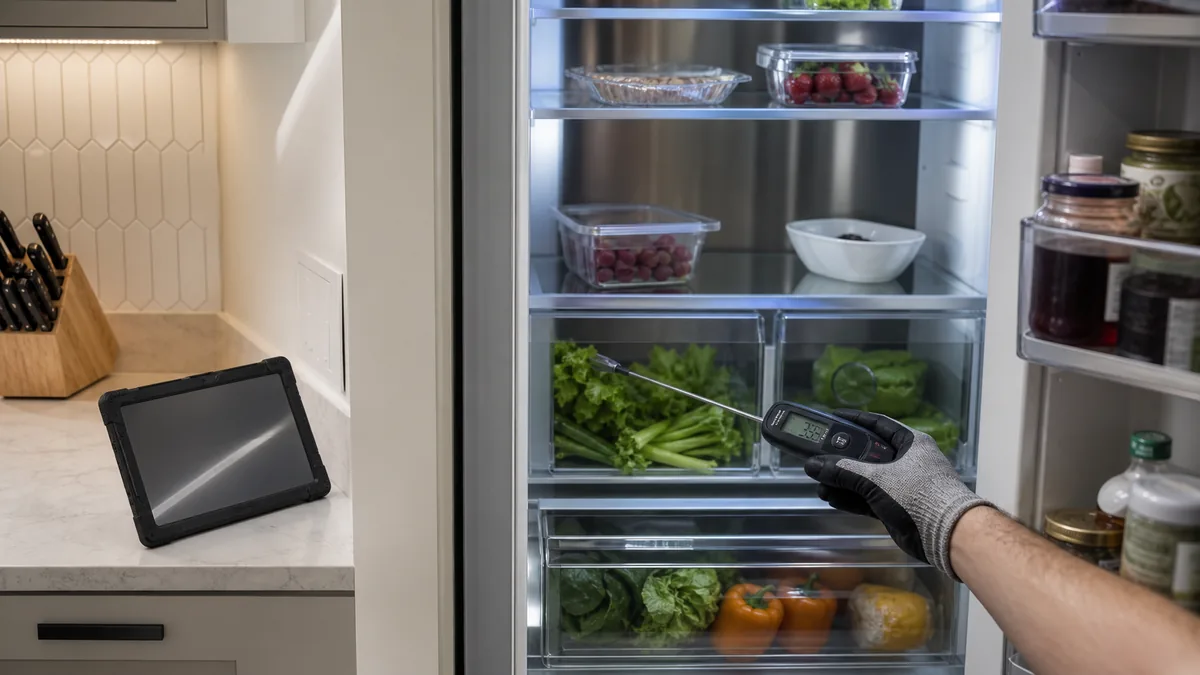
Gloved technician hand measuring refrigerator temperature with a probe inside a built-in stainless refrigerator
Probe evidence. Logged compartment temperatures against set point — the first proof we collect before any sealed-system claim.

Repair economics

Sub-Zero repair pricing in Los Gatos

These are typical Los Gatos ranges for Sub-Zero built-ins, confirmed in writing after diagnosis. The diagnostic is credited in full to any repair you approve, so an honest inspection never costs you twice. We never publish a fake precise number.

  • Diagnostic / service visit (credited to repair)$135-$210
  • Common repairs — fans, gasket, thermistor, damper, controls$215-$780
  • Sealed-system or compressor (built-in exception)$945-$2,650

Repair vs replacement: a replacement built-in column or side-by-side runs $9,500-$16,500-plus once cabinetry is refitted, so even a sealed-system repair often extends a 15–20 year unit at a fraction of replacement. The sealed-system range is the costly exception, which is exactly why we verify it before recommending it. Weigh the math on our repair-vs-replace breakdown.

From a recent job

What a real diagnosis looks like

The case below is a typical Sub-Zero job we diagnose in Los Gatos. More are collected on the case studies page.

La Rinconada / Rinconada Hills

"Compressor going out" that was really a choked condenser

Symptom
Hillside side-by-side running non-stop, fresh food creeping to the high 40s°F.
Diagnosis
Condenser coil packed with dust and pet hair; airflow restored, temps logged before and after.
What it was not
Sealed-system readings were in range — no compressor work needed once airflow returned.
Outcome
Fresh-food zone back to 38°F, verified by probe, at a fraction of a sealed-system quote.
Technician testing sealed-system access behind a built-in refrigerator with gauges and floor protection in place
Sealed-system map. Compressor, condenser, metering and evaporator — the loop where EPA Section 608-regulated handling is required and where we prove a fault before quoting it.

Process & coverage note. We install genuine OEM Sub-Zero parts, document the before-and-after readings, and stand behind the parts and labor we provide. If a repair isn't the right call for the age of the unit, we say so plainly rather than sell you a job — that's the whole point of diagnosing before quoting.

Real answers

Sub-Zero repair questions we hear in Los Gatos

How often should a built-in Sub-Zero condenser be cleaned in Los Gatos?

In our dry foothill climate, and especially in homes with pets, we recommend vacuuming the condenser behind the top grille every six to twelve months. A coil packed with dust or pet hair makes the compressor run hot and long, which looks like a cooling failure but is often just airflow. We confirm it on site by reading compartment temperatures and inspecting the coil before recommending any part.

Is frost or condensation around the door always a gasket problem?

Not always. A compressed, hardened or torn gasket is the most common cause of a frost line or a sweaty door, but a sagging panel-ready door, a misaligned hinge, or a unit reseated out of true can break the seal with a perfectly good gasket. We map where the frost forms and check door closure before deciding whether the gasket, the hinge, or the alignment is the fix.

Do you handle sealed-system and refrigerant work yourselves?

Yes. Sealed-system and compressor faults are confirmed with instruments, and any refrigerant work is treated as EPA Section 608-regulated and evidence-dependent — never a top-off and hope. Because it is the costly exception, we verify a sealed-system fault with temperature readings, condenser and evaporator inspection and pressure evidence before we recommend that repair. See the deeper walkthrough on our sealed-system and compressor page.

Can you service panel-ready and integrated units without damaging cabinetry?

Yes. Most Los Gatos built-ins sit in custom millwork with panel-ready or flush-inset fronts. We protect floors and cabinet faces, pull the unit only when access requires it, and reseat it true so the door closes flush and the gasket seals correctly afterward.

What can't you tell me before you inspect the unit?

We can give a likely cause from your symptom and model number, but we cannot confirm a sealed-system leak, a failed control board, or whether a part is OEM-available for your serial until we are on site. Those require instrument readings, a look behind the rear evaporator panel, and the rating plate. That is why the diagnostic exists and why it is credited to the repair.

Have the model number? That request is faster and cheaper.

Read your model and serial off the upper-left interior wall or behind the toe-grille, tell us the symptom, and we arrive with the parts your unit actually takes. Start at the homepage overview if you're still narrowing the symptom, or read the Booking page to reserve a window.

What repairs cost

Sub-Zero repair cost in Los Gatos

Typical Los Gatos planning ranges for built-in Sub-Zero repairs, confirmed in writing after on-site diagnosis. The diagnostic is credited to any repair you approve.

Typical Los Gatos built-in Sub-Zero repair ranges
Service / symptomWhat’s includedPrice rangeTypical time
Diagnostic visit (credited)Both-zone probe, frost / airflow check$135-$21045-90 min
Door gasket + hingeOEM gasket, alignment, seal-drag test$255-$5251-2 hrs
Evaporator / condenser fan motorOEM fan, airflow restored$365-$6951-3 hrs
Ice maker module / inlet valveWater-volume proof, OEM part$275-$5801-3 hrs
Thermistor / damper / defrostSensor or damper, defrost verified$215-$5901-3 hrs
Control / interface boardSerial-specific board$545-$1,0451-4 hrs
Sealed-system / compressorPressure proof, EPA-608 recovery$945-$2,6502-6 hrs + parts

Fast fact: Most built-in Sub-Zero repairs in Los Gatos land between $215 and $780; the sealed-system exception runs $945-$2,650. The $135-$210 diagnostic is credited to any approved repair.

Customer reviews

What Los Gatos homeowners value after a Sub-Zero visit

Recent Sub-Zero work across Los Gatos and the West Valley.

Our BI-36U ran constantly and warmed in a Belgatos remodel. The condenser was packed with foothill dust; they cleaned it and replaced the condenser fan. $470, quiet and cold again the same day.
Homeowner, Belgatos · condenser fan & airflow
Fresh-food side warm on our 648PRO in Glenridge (95032). The tech probed both zones, replaced the evaporator fan and verified 38 °F. $415, one visit, no upsell to a compressor.
K.D., Glenridge · evaporator fan repair
Gasket leak and frost on our panel-ready 642 in Almond Grove. They swapped the OEM gasket and reseated the door for $320; the seal-drag test passed before they left.
Homeowner, Almond Grove · door gasket repair
Call (408) 402-4604 Book Online